AI Automation Platforms vs Traditional RPA: Total Cost Comparison (2026)
Tom van Wees
·
10 min read
Traditional RPA costs €228,000 in year one versus €77,000 for AI automation platforms—a 66% cost difference that grows to €351,000 over three years. This comprehensive comparison reveals why European manufacturers, wholesalers, and logistics companies are abandoning UIPath and Blue Prism for AI-native solutions. Beyond licensing fees, traditional RPA carries hidden costs: €105,000 implementation expenses, 6-12 month deployment timelines, and €177,000 in annual maintenance. AI platforms deploy in 2-4 weeks with 70% lower ongoing costs and self-healing capabilities. Real case studies from Dutch companies show 8-month payback periods versus 22 months for RPA, with superior flexibility and strategic value RPA can't match.
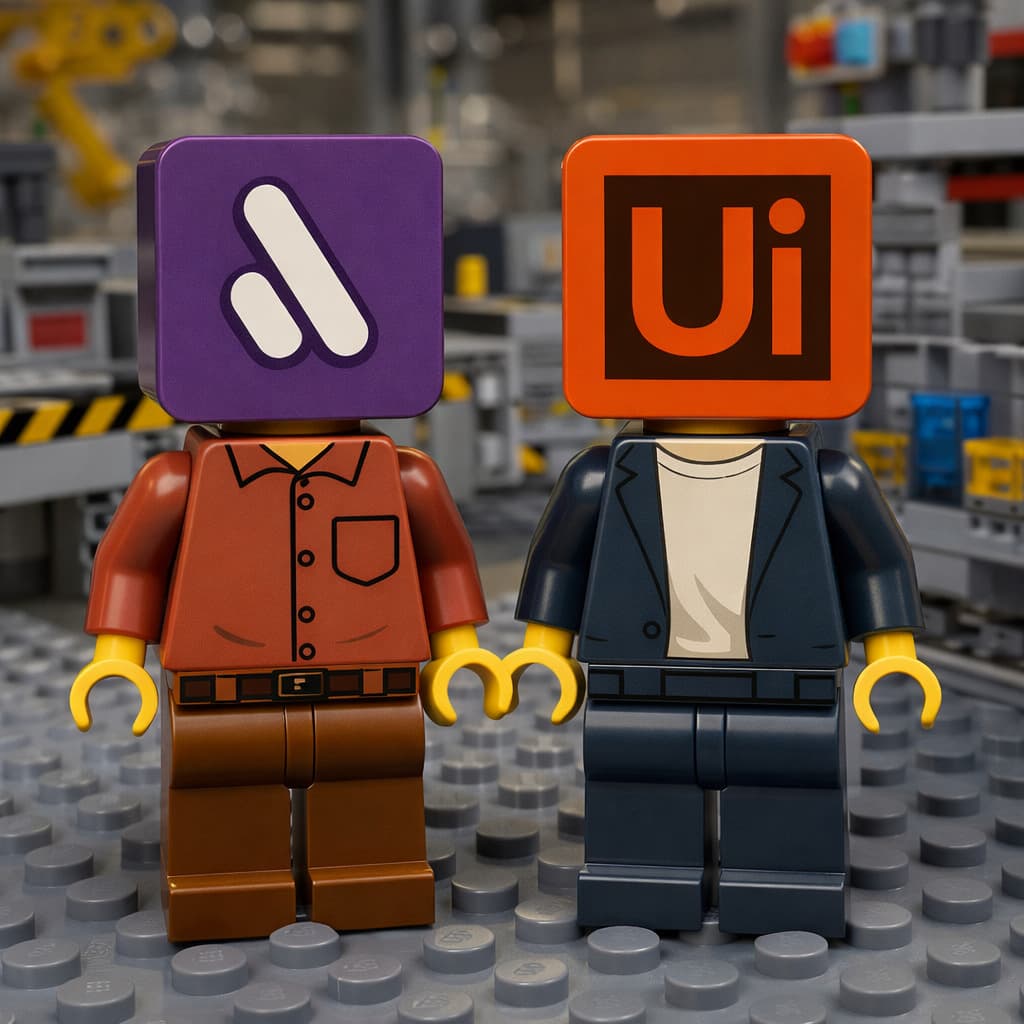
A £150,000 UIPath implementation versus €24,000 in annual platform costs. That's the stark reality facing CFOs evaluating automation investments in 2026. But the true cost difference runs far deeper than licensing fees.
After analyzing implementation costs across 50+ European businesses—from 140-year-old wood manufacturers to modern IT resellers—the financial gap between traditional RPA and AI-native automation platforms has never been more dramatic. While Robotic Process Automation promised efficiency gains, businesses are discovering that high upfront costs, extensive maintenance requirements, and rigid workflows create a hidden financial burden that AI automation platforms simply don't carry.
Understanding the Total Cost Reality
Traditional RPA solutions like UIPath and Blue Prism dominated automation for years. But as companies like Koninklijke Dekker and Ynvolve discovered, the advertised pricing tells only a fraction of the story.
Traditional RPA: The Full Cost Breakdown
UIPath's pricing structure reveals the complexity. A Pro Plan starts at €420 per month (€5,040 annually) for one attended and one unattended bot. But that's just the beginning.
License Costs (25-30% of Total)
Single UiPath bot: €1,200-€8,000 annually
Automation Anywhere Cloud Starter Pack: €750/month (€9,000/year)
Blue Prism enterprise licensing: Custom pricing, typically €2,000+ per user annually
Implementation Costs (35-40% of Total)
Small to medium businesses: €10,000-€50,000
Complex workflows: €50,000-€500,000
Enterprise deployments: €150,000+
Research from SmartDev shows that consulting fees alone can range from €20,000 to €100,000, depending on project scope and consultant expertise.
Infrastructure Costs (15-20% of Total)
Cloud services: €20,000-€200,000 annually
On-premises servers: €10,000+ initial investment plus ongoing maintenance
Hardware upgrades: Variable, often unexpected
Maintenance & Support (20-25% of Total)
Annual maintenance: €10,000-€100,000
Bot monitoring and updates: Ongoing staff time
Technical support: €2,000-€8,000 monthly retainers
Integration Complexity (Hidden Cost)
Connecting to legacy systems: €20,000-€200,000
Custom development work: €50-€250 per hour
API setup and maintenance: Ongoing
A Deloitte study found that only 3% of organizations successfully scaled their RPA digital workforce, while 30-50% of RPA initiatives failed outright. The EY analysis is even more sobering: initial ROI from automating high-volume processes often doesn't surpass automation's total cost to the business.
AI Automation Platforms: A Different Economic Model
Modern AI-native platforms like Lleverage operate fundamentally differently. Instead of requiring extensive development and rigid rule-based logic, they use natural language processing and AI to handle complexity that would break traditional RPA.
Typical Pricing Structure
Professional tiers: €50-€500 monthly
Enterprise solutions: €500-€5,000 monthly
Usage-based components: Token consumption, API calls
Implementation Reality
Working prototypes: Days, not months
Full deployment: 2-4 weeks typical
Consulting support: Often included in platform pricing
Maintenance Requirements
Self-healing systems detect and correct errors
Automatic model updates
Minimal ongoing technical overhead
Integration Approach
Pre-built connectors to 2,000+ applications
Native ERP integration (Business Central, SAP, Dynamics 365, Navision, Afas)
Visual workflow builders requiring no coding
The €126,000 Annual Difference: Real Numbers
Let's examine a mid-sized European manufacturer processing 500 orders, 300 invoices, and 200 quotes monthly—typical volumes for businesses with €10-50 million revenue.
Traditional RPA (UIPath) - Year One
Licensing & Software
3 unattended bots: €24,000
2 attended bots: €3,000
Orchestrator platform: €15,000
Subtotal: €42,000
Implementation
Consulting and analysis: €35,000
Bot development: €45,000
Integration work: €25,000
Subtotal: €105,000
Infrastructure
Cloud hosting: €18,000
Monitoring tools: €6,000
Subtotal: €24,000
Internal Resources
RPA developer (6 months): €45,000
IT support allocation: €12,000
Subtotal: €57,000
Year One Total: €228,000
Traditional RPA - Ongoing Annual Costs
Licensing & Support
Annual license renewal: €42,000
Vendor support contract: €12,000
Subtotal: €54,000
Maintenance
Bot updates and fixes: €30,000
Infrastructure costs: €24,000
Monitoring and optimization: €18,000
Subtotal: €72,000
Internal Resources
Ongoing RPA support: €36,000
Process changes: €15,000
Subtotal: €51,000
Annual Ongoing: €177,000
AI Automation Platform (Lleverage) - Year One
Platform Subscription
Enterprise plan: €36,000 annually
Subtotal: €36,000
Implementation
Process analysis and design: €15,000
Workflow setup (included in onboarding): €0
Custom integrations: €8,000
Subtotal: €23,000
Internal Resources
Business analyst time: €12,000
Testing and validation: €6,000
Subtotal: €18,000
Year One Total: €77,000
AI Automation Platform - Ongoing Annual Costs
Platform Subscription
Annual platform fee: €36,000
Subtotal: €36,000
Maintenance
Platform updates: Included
Optimization support: €6,000
Minor workflow changes: €3,000
Subtotal: €9,000
Internal Resources
Ongoing optimization: €9,000
Subtotal: €9,000
Annual Ongoing: €54,000
The Bottom Line
Year One Savings: €151,000 (66% reduction)Annual Ongoing Savings: €123,000 (70% reduction)Three-Year Total Cost:
Traditional RPA: €582,000
AI Platform: €231,000
Savings: €351,000
Beyond the Numbers: Hidden Costs That Kill RPA ROI
The financial comparison only tells part of the story. Traditional RPA implementations carry hidden costs that rarely appear in initial budgets but devastate long-term ROI.
Technical Debt and Maintenance Burden
RPA bots are brittle. When a website layout changes or an application updates, bots break. A 2024 Medium article on RPA implementation costs found that customized RPA components lead to technical debt, especially when documentation is sparse. Managing version control and maintaining custom code adds substantial expenses.
Koninklijke Dekker, a 140-year-old Dutch wood company, initially considered traditional RPA. Their operations team estimated they'd need three full-time developers just to maintain bots across their order processing workflow—before even considering expansion to invoicing or quoting.
AI automation platforms handle this differently. When Lleverage processes documents, it doesn't rely on pixel-perfect screen positions. It understands content semantically. When a supplier changes their invoice format, the AI adapts without requiring developer intervention.
The Scaling Problem
Traditional RPA costs scale linearly—or worse. Each new process requires:
Additional bot licenses
Development time to build and test
Infrastructure to support increased load
Maintenance overhead
AIMultiple research shows this clearly: as bot counts increase from 5 to 50, costs don't just double—they often triple due to increased complexity in orchestration, monitoring, and management.
AI platforms scale differently. Once workflows are established, adding new processes leverages existing infrastructure and AI models. The marginal cost of automating process #10 is dramatically lower than process #1.
Change Management and Flexibility
Business processes evolve. Customer requirements change. Regulations update. Market conditions shift.
With traditional RPA, process changes mean development cycles:
Document new requirements
Update bot logic
Test extensively
Deploy carefully
Monitor for breaks
This typically requires 2-6 weeks per change and costs €3,000-€15,000 depending on complexity.
AI automation platforms like Lleverage handle changes through natural language updates and visual workflow modifications. Business users can adjust routing logic, validation rules, or data transformations without technical expertise. What took weeks now takes hours.
Integration Complexity
The Planeks analysis highlights integration as a major cost driver. RPA tools depend on IT system integration through APIs, and third-party integration adds extra costs. If integrations with Google Cloud, Azure, or AWS are required, total costs rise significantly.
For a European manufacturer using Business Central ERP, connecting traditional RPA might require:
Custom API development: €15,000-€40,000
Middleware solutions: €8,000-€25,000 annually
Ongoing integration maintenance: €12,000+ annually
Modern AI platforms come with native integrations. Lleverage offers bidirectional sync with Business Central, SAP, Dynamics 365 F&O, Navision, and Afas out of the box. Setup takes days, not months.
Industry-Specific Cost Comparisons
Different industries face unique automation challenges that affect total cost of ownership. Let's examine three sectors where the cost difference is most dramatic.
Manufacturing: From Production Planning to Order Processing
Traditional RPA ApproachManufacturing processes involve complex exception handling. A production planning bot needs to:
Check inventory levels
Verify supplier lead times
Calculate capacity
Handle rush orders
Manage material shortages
Building this with traditional RPA requires extensive programming for each exception. Our research found manufacturers spending €75,000-€150,000 for production planning automation alone.
AI Platform ApproachAI-native automation handles exceptions through learned patterns. After processing hundreds of planning scenarios, the AI recognizes patterns that humans would codify as rules. Implementation cost: €15,000-€30,000.
Real example: European manufacturers using AI automation save €300,000+ annually by automating order creation, invoice processing, support queries, production planning, document verification, quotes, data extraction, and back-office workflows.
Wholesale & Distribution: Document Processing at Scale
Wholesale companies process massive document volumes in varied formats. Orders arrive via email, EDI, portal uploads, fax, and phone calls. Traditional RPA requires separate bots for each input channel.
Traditional RPA Approach
Email parser bot: €15,000
EDI integration: €25,000
Portal scraping bot: €12,000
Manual entry reduction workflow: €18,000
Total implementation: €70,000
Annual maintenance: €28,000
AI Platform ApproachAI document processing handles all input formats through a single workflow. The AI extracts data from PDFs, Excel files, images, and structured EDI messages without channel-specific programming.
Real savings: Dutch wholesalers and manufacturers are eliminating 30-50% of back-office costs and achieving 60-80% faster processing times.
Logistics: Real-Time Decision Making
Logistics operations require real-time responses to changing conditions. Traditional RPA struggles with this because bots execute predetermined scripts—they can't make judgment calls.
Traditional RPA Limitations
Can't handle unexpected shipment delays
Requires human intervention for route optimization
Breaks when carrier systems update
Limited ability to learn from historical data
AI Platform Advantages
Analyzes patterns across thousands of shipments
Predicts delays before they happen
Optimizes routes based on real-time conditions
Improves continuously through machine learning
Cost comparison: Traditional RPA for logistics automation typically runs €100,000+ for basic implementations. AI platforms achieve broader automation for €30,000-€50,000.
The Hidden Value of AI: What Traditional RPA Can't Do
Some capabilities simply don't exist in traditional RPA—at any price. These represent not just cost savings but competitive advantages that create entirely new value.
Intelligent Document Understanding
Traditional RPA reads documents through template matching or OCR with rigid field mapping. If a supplier changes their invoice layout, the bot breaks.
AI platforms use computer vision and natural language processing to understand documents semantically. Lleverage's document processing extracts data from invoices regardless of format—no template required.
This matters enormously for businesses dealing with multiple suppliers. One Dutch manufacturer estimated they'd need 47 separate RPA templates to handle all their supplier invoice formats. With AI automation, they needed one workflow.
Context-Aware Decision Making
RPA follows "if-then" rules. AI understands context.
Example: A quote request comes in asking for "urgent delivery of the usual order."
Traditional RPA: Fails. The bot doesn't know what "usual order" means or how to interpret "urgent."
AI Automation: Searches previous orders from this customer, identifies the most frequent items, checks current inventory, calculates expedited shipping, and generates the quote—all automatically.
This capability transforms not just cost but customer satisfaction. Response times drop from hours to minutes.
Continuous Learning and Improvement
Perhaps the most significant difference: AI automation gets better over time.
Traditional RPA bots do exactly what they're programmed to do, forever. If you want them to improve, you need to reprogram them. That means another development cycle, more costs, more time.
AI platforms learn from every transaction. When humans override AI decisions or make corrections, the system learns. Accuracy improves. Exception rates decrease. The ROI grows stronger each month.
Ynvolve, a Dutch IT reseller, implemented AI quote automation through Lleverage. In the first month, the AI required human review on 30% of quotes. By month six, that dropped to 8%. The system was learning which quotes were straightforward versus which needed human judgment—without any additional programming.
Implementation Timeline: Speed to Value
Time is money. The faster automation delivers value, the better the ROI. Traditional RPA and AI platforms differ dramatically in implementation speed.
Traditional RPA: 6-12 Month Journey
Month 1-2: Discovery and Planning
Process documentation
Requirements gathering
Bot design
Architecture planning
Month 3-5: Development
Bot programming
Testing environments setup
Initial testing
Bug fixes
Month 6-8: Integration
API connections
System integration
Security configuration
Performance testing
Month 9-12: Deployment and Stabilization
Pilot deployment
Issue resolution
User training
Full rollout
During these 6-12 months, you're investing but not yet seeing returns. The business case that justified the project assumes immediate benefits, but reality delays ROI by nearly a year.
AI Automation Platform: 2-4 Week Deployment
Week 1: Process Analysis
Review current workflow
Identify automation opportunities
Design initial approach
Configure platform access
Week 2: Build and Test
Create automation workflow
Test with real documents
Refine logic
Validate accuracy
Week 3: Integration
Connect to ERP/CRM
Configure data flows
Security setup
User interface customization
Week 4: Deploy and Optimize
Go-live with monitoring
Handle exceptions
Tune confidence thresholds
Train business users
Real example: Koninklijke Dekker went from manual order processing to fully automated workflow in 6 weeks. They processed their first automated orders within 2 weeks.
The speed difference compounds ROI dramatically. If automation saves €10,000 monthly, getting it running in 3 weeks versus 9 months means an additional €75,000 in first-year value.
Risk Assessment: What Can Go Wrong?
Every technology investment carries risk. Understanding these risks helps make informed decisions.
Traditional RPA Risks
Technical Risks
Bot breaking when applications update
Scalability limitations
Integration failures
Security vulnerabilities from screen scraping
Business Risks
Long implementation delays
Cost overruns (common)
Limited flexibility when processes change
Vendor lock-in
Operational Risks
High maintenance burden
Dependency on technical expertise
Difficulty scaling across organization
Change management complexity
SmartDev research emphasizes that "while RPA is designed to work with existing systems, the extent of customization and integration required to achieve seamless operations can lead to substantial unexpected expenses."
AI Automation Platform Risks
Technical Risks
AI model accuracy for edge cases
Token/API usage cost variability
Dependency on AI provider uptime
Data privacy considerations
Business Risks
Organizational change management
User adoption challenges
Potential need for process redesign
ROI measurement complexity
Operational Risks
Over-reliance on automation
Skill gaps in AI understanding
Integration with legacy systems
Compliance with AI regulations
The key difference: Traditional RPA risks are primarily technical and increase over time. AI platform risks are primarily organizational and decrease with experience.
ROI Measurement: Beyond Cost Savings
Automation's value extends beyond direct cost reduction. Comprehensive ROI measurement should include:
Quantifiable Benefits
Direct Cost Savings
Labor cost reduction
Error correction elimination
Late payment fee avoidance
Early payment discount capture
Efficiency Gains
Processing time reduction
Faster customer response
Increased throughput
Reduced cycle times
Quality Improvements
Error rate reduction
Consistency improvements
Compliance enhancement
Audit readiness
Strategic Value
Scalability
Growth without headcount increase
Geographic expansion capability
Service level improvement
Capacity for innovation
Competitive Advantage
Faster time-to-market
Superior customer experience
Market differentiation
Data-driven insights
Employee Impact
Higher job satisfaction
Focus on strategic work
Reduced burnout
Skill development
The ROI of AI automation typically shows positive returns within 3-6 months for high-volume processes like order entry or invoice processing.
Making the Right Choice: Decision Framework
So which approach makes sense for your business? Here's a practical framework.
Choose Traditional RPA When:
You Have:
Extremely stable processes with no expected changes
Large in-house development team with RPA expertise
Very specific, narrow automation needs
Unlimited budget and timeline
Processes that don't involve document interpretation
Simple, rule-based decision-making only
Reality Check: Very few modern businesses meet all these criteria. Even stable processes evolve, suppliers change formats, and market conditions shift.
Choose AI Automation Platforms When:
You Have:
Document-heavy processes (orders, invoices, quotes)
Multiple input formats and sources
Processes requiring context understanding
Need for quick deployment and ROI
Limited technical resources
Plans to scale automation across the organization
Business users who should control workflows
This describes most European manufacturers, wholesalers, and logistics companies.
Hybrid Approach: The Pragmatic Middle Ground
Some organizations benefit from combining approaches:
Use traditional RPA for legacy system screen automation
Deploy AI platforms for document processing and decision-making
Orchestrate both through a unified workflow engine
However, this adds complexity and management overhead. Most businesses find better results choosing one primary approach.
Implementation Best Practices
Regardless of which approach you choose, these practices improve success rates:
Start with High-Impact Processes
Don't begin with your most complex workflow. Start with processes that:
Have clear, measurable metrics
Process high volumes
Experience frequent errors
Consume significant time
Frustrate employees
For most businesses, this means order processing, invoice handling, or quote generation.
Define Success Metrics Before Implementation
Establish baseline measurements:
Current processing time per transaction
Error rate percentage
Cost per transaction
Customer satisfaction scores
Employee satisfaction
Then set clear targets for improvement. This allows you to prove ROI conclusively.
Plan for Change Management
Technology is the easy part. People are harder.
Successful implementations include:
Clear communication about automation goals
Employee involvement in process design
Training and support programs
Transition plans for affected staff
Ongoing feedback mechanisms
Maintain Human Oversight
Even with AI automation, humans should review:
High-value transactions
Edge cases and exceptions
Quality metrics and accuracy
Continuous improvement opportunities
Lleverage's platform supports graduated autonomy—starting with 100% human review and progressively moving to exception-only oversight as confidence builds.
The European Context: Compliance and Data Sovereignty
European businesses face unique considerations around automation that significantly affect platform selection.
GDPR Compliance
AI automation platforms must ensure:
Data processing transparency
Right to explanation for automated decisions
Data minimization principles
Purpose limitation
Storage limitation
Traditional RPA often struggles with GDPR because bots capture and store screen data indiscriminately. Modern AI platforms process data in real-time without persistent storage.
EU AI Act Readiness
The EU AI Act applies 36 months after entry into force, with certain provisions taking effect earlier. Businesses automating now should ensure:
Risk classification alignment
Human oversight capabilities
Audit trail completeness
Bias detection and mitigation
Transparency in decision-making
AI-native platforms are built with these requirements in mind. Traditional RPA, designed before these regulations, often requires extensive retrofitting.
Data Sovereignty
Many European businesses require:
Data processing within EU borders
No data sharing with non-EU entities
Transparent data handling
Control over AI model training
Lleverage ensures zero data retention by third-party AI providers, with processing occurring in real-time on European infrastructure and immediate purging from all systems.
Future-Proofing Your Investment
Technology evolves rapidly. The automation solution you choose today should remain relevant for 5+ years.
Traditional RPA Evolution
RPA vendors are adding AI capabilities, but fundamental architecture limitations remain:
Still primarily rule-based at core
Screen scraping creates brittleness
Requires extensive development expertise
Linear cost scaling persists
AI Platform Trajectory
AI automation platforms are rapidly improving:
Model capabilities expanding monthly
Accuracy improving continuously
Cost per transaction decreasing
Integration options multiplying
The platform that handles your invoices today will handle more complex contracts tomorrow—without requiring new development.
Agentic AI: The Next Evolution
The automation landscape is shifting toward AI agents—autonomous systems that can:
Make multi-step decisions
Coordinate across processes
Learn from experience
Handle truly novel situations
Early indicators suggest AI-native platforms will adapt to this evolution far more readily than traditional RPA retrofits.
Case Study: Real-World Cost Comparison
Let's examine a detailed case from a European IT reseller that evaluated both approaches.
Company Profile
Ynvolve
Industry: IT services and wholesale
Size: €15M annual revenue
Challenge: Manual quote generation taking 4-6 hours per quote
Volume: 200+ quotes monthly
Traditional RPA Quote (Received)
Implementation
Bot development: €45,000
Integration with ERP: €18,000
Testing and refinement: €12,000
Total: €75,000
Timeline: 4-6 months
Annual Costs
Licenses: €12,000
Maintenance: €15,000
Support: €8,000
Total: €35,000
Limitations Identified:
Couldn't handle complex pricing scenarios
Required manual input for customer-specific terms
Broke when ERP updated
Limited to standard product configurations
AI Automation Outcome (Implemented)
Implementation
Platform setup: €8,000
Process design: €7,000
Integration: €5,000
Total: €20,000
Timeline: 3 weeks
Annual Costs
Platform subscription: €18,000
Optimization support: €6,000
Total: €24,000
Results Achieved:
Quote time: 90% reduction (4-6 hours → 20 minutes)
Accuracy: 98%+ from day one
Monthly cost savings: €30,000
Revenue impact: 50% growth capacity without hiring
Three-Year Comparison:
Traditional RPA total: €180,000
AI automation total: €68,000
Savings: €112,000 (62%)
But the real value wasn't just cost. Ynvolve closed deals faster, handled more opportunities, and scaled their business without expanding their sales operations team.
The CFO Perspective: Financial Analysis
Let's translate technical details into financial metrics that matter to decision-makers.
Capital vs. Operating Expense
Traditional RPA
Large upfront capital investment
Implementation costs capitalize over time
Unpredictable maintenance expenses
Difficult to exit if unsuccessful
AI Platforms
Subscription-based operating expense
Predictable monthly/annual costs
Scales with usage and value
Can adjust investment based on results
For most businesses, the OpEx model provides better financial flexibility and risk management.
Payback Period Analysis
Based on our €10-50M revenue manufacturer example processing 500 orders, 300 invoices, and 200 quotes monthly:
Traditional RPA
Year one investment: €228,000
Annual savings (labor): €120,000
Payback period: 22 months
AI Platform
Year one investment: €77,000
Annual savings (labor): €120,000
Payback period: 8 months
The 14-month faster payback period represents €140,000 in opportunity cost for traditional RPA.
Net Present Value (5 Years)
Assuming 8% discount rate and €120,000 annual labor savings:
Traditional RPA
Initial investment: €228,000
Annual costs: €177,000
Annual savings: €120,000
Net annual value: -€57,000
5-Year NPV: -€449,848
AI Platform
Initial investment: €77,000
Annual costs: €54,000
Annual savings: €120,000
Net annual value: €66,000
5-Year NPV: €186,381
The NPV difference of €636,229 over five years makes the financial decision clear.
Risk-Adjusted Return
Traditional RPA carries higher implementation risk:
30-50% failure rate
Frequent cost overruns
Extended timelines
Adjusting for these risks, expected value calculations heavily favor AI platforms:
Traditional RPA Expected Value
Success scenario (50% probability): €100,000 NPV
Failure scenario (50% probability): -€200,000 NPV
Expected value: -€50,000
AI Platform Expected Value
Success scenario (85% probability): €186,381 NPV
Partial success (15% probability): €50,000 NPV
Expected value: €166,024
Vendor Selection Criteria
If you've decided on an AI automation platform, how do you choose the right one?
Essential Capabilities
Document Processing
Multi-format support (PDF, Excel, images, email)
Accuracy without templates
Handling variations and exceptions
Continuous learning
Integration Depth
Native ERP connectors
Bidirectional data sync
Real-time processing
API flexibility
Workflow Flexibility
Visual design interface
Business user control
Version management
Change rollback capability
Deployment Options
Cloud-based for speed
On-premises for security
Hybrid for flexibility
European data residency
Evaluation Process
Phase 1: Capability Validation
Test with your actual documents
Process real examples
Measure accuracy
Verify integration options
Phase 2: Implementation Assessment
Review onboarding approach
Understand timeline
Clarify support model
Validate training program
Phase 3: Commercial Analysis
Compare total cost models
Understand scaling costs
Review contract terms
Assess exit options
Phase 4: Reference Validation
Speak with current customers
Review case studies
Understand common issues
Verify claimed results
Red Flags to Avoid
Vendor Red Flags:
Unwilling to process your documents in demo
Vague about implementation timeline
Complex, confusing pricing
No customers in your industry
Lack of European data residency
Poor integration documentation
Technical Red Flags:
Requires extensive coding
Can't handle document variations
Needs templates for each supplier
Poor accuracy on real documents
Slow processing speeds
Limited scalability
Implementation Roadmap: 90-Day Plan
Here's a practical timeline for implementing AI automation.
Day 1-14: Foundation
Week 1: Process Selection
List all automation candidates
Calculate potential ROI for each
Select highest-impact process
Define success metrics
Week 2: Platform Selection
Demo 2-3 platforms
Test with real documents
Evaluate integration options
Select vendor
Day 15-45: Implementation
Week 3: Design
Map current process
Document exceptions
Define workflow logic
Plan integration approach
Week 4: Build
Configure platform
Create automation workflow
Set up integrations
Establish monitoring
Week 5-6: Test and Refine
Process test documents
Validate accuracy
Handle edge cases
Optimize performance
Day 46-90: Deployment and Optimization
Week 7: Pilot Launch
Deploy to pilot users
Process real transactions
Monitor closely
Make adjustments
Week 8-10: Scale
Expand to full team
Increase volume
Track metrics
Refine workflows
Week 11-13: Optimize
Analyze results
Identify improvements
Expand use cases
Plan next automations
By day 90, you should have a working system processing real transactions and delivering measurable ROI.
Getting Started: Next Steps
If the cost comparison convinced you, here's how to begin.
This Week
Monday: Document your most time-consuming manual process. Count how many hours it requires monthly and calculate the cost.
Tuesday-Wednesday: Research 2-3 AI automation platforms. Lleverage, Make, and Power Automate are good starting points. Request demos.
Thursday: Gather sample documents from your process. Invoices, orders, quotes—whatever you're automating. You'll need these for platform testing.
Friday: Book a demo with your top choice. Come with your actual documents and specific questions.
This Month
Week 2: Complete platform evaluations. Test with your documents. Don't accept generic demos—insist on processing your actual files.
Week 3: Make your selection. Negotiate terms. Ensure the contract includes success metrics and support commitments.
Week 4: Begin implementation. Follow the 90-day roadmap outlined above.
This Quarter
By end of Q1, you should have your first automation running, processing real transactions, and delivering measurable savings. Use this success to justify expanding automation to additional processes.
Conclusion: The Clear Financial Winner
The cost comparison between traditional RPA and AI automation platforms isn't close. Across every metric that matters—implementation cost, ongoing expenses, speed to value, flexibility, and strategic capability—AI-native platforms deliver dramatically superior ROI.
A £150,000 UIPath implementation versus €24,000 in annual platform costs. But as we've seen, the true difference is even more dramatic when you account for:
66% lower year-one costs
70% lower ongoing annual costs
€351,000 in three-year savings
8-month payback versus 22 months
Strategic capabilities traditional RPA can't match
For European manufacturers, wholesalers, and logistics companies facing competitive pressure and margin compression, these cost differences aren't academic. They're existential.
The businesses automating today with AI platforms will process more transactions, faster, with fewer errors, at dramatically lower cost than competitors stuck on traditional RPA. That's not just efficiency—it's competitive advantage that compounds over time.
Koninklijke Dekker's journey from a 140-year-old traditional wood company to a digitally advanced operation shows what's possible. If they can automate in weeks and achieve massive ROI, what's stopping you?
The question isn't whether to automate. It's whether you'll choose technology that delivers ROI in months or years. The data makes the answer clear.
Ready to see the cost difference for yourself? Book a demo with Lleverage and bring your actual documents. See your invoices, orders, or quotes being processed by AI in real-time. No generic demos, no vague promises—just your processes, automated.
FAQ
Q: Can AI automation handle our complex, industry-specific processes?
Complex is where AI shines. Unlike rule-based RPA that breaks under complexity, AI thrives on it. The more complex your operations, the bigger your advantage when you automate. Whether you're in manufacturing, wholesale, or logistics, AI automation adapts to your specific needs without custom development.
Q: What about our existing ERP system—will we need to replace it?
Absolutely not. AI automation sits on top of your existing systems, connecting them intelligently. Lleverage integrates natively with Business Central, SAP, Dynamics 365, Navision, and Afas. Keep your ERP, WMS, and TMS. Just make them work together seamlessly. This is fundamentally different from traditional RPA, which often requires expensive middleware and custom integration work.
Q: How quickly can we see ROI from AI automation?
Most companies see positive ROI within 3-6 months for high-volume processes. Order processing and invoice automation often pay for themselves within weeks. Implementation takes 2-4 weeks, not 6-12 months like traditional RPA, so you start saving faster.
Q: What happens when our processes change?
This is where AI automation dramatically outperforms traditional RPA. Process changes that would require weeks of development and testing with RPA can be adjusted in hours through visual workflow modifications. Business users control the changes—no developer required. The AI adapts to new document formats and variations automatically.
Q: Isn't traditional RPA more mature and proven?
Traditional RPA is older, but "mature" doesn't mean better. It means the technology reached its limitations years ago. The 30-50% failure rate and only 3% successfully scaling their digital workforce prove traditional RPA struggles with real-world complexity. AI automation represents the next evolution—purpose-built for the problems RPA couldn't solve.
Q: What about data security and GDPR compliance?
AI platforms actually offer stronger security than traditional RPA. Lleverage ensures zero data retention by third-party AI providers, with real-time processing and immediate data purging. European-based infrastructure, SOC 2 and ISO 27001 certification, and GDPR compliance by design. Traditional RPA's screen scraping approach creates more security vulnerabilities.
Q: Do we need AI or data science expertise to use these platforms?
No. That's the entire point of modern AI automation platforms. Lleverage is designed for business users, not technical specialists. You describe what you want in plain language, design workflows visually, and let the AI handle the complexity. Traditional RPA requires developers. AI platforms don't.
Q: What if the AI makes mistakes?
Start with human oversight and gradually increase autonomy as accuracy proves itself. Lleverage's graduated autonomy begins with 100% human review, then moves to exception-only oversight. You control confidence thresholds and can always intervene. Real-time monitoring alerts you to accuracy degradation. Unlike RPA bots that silently process errors, AI systems flag uncertainty.
Q: Can we start small and scale, or do we need to automate everything at once?
Start small—that's the recommended approach. Pick your highest-impact process (usually invoice processing, order creation, or quote generation), prove the ROI, then expand systematically. Unlike traditional RPA where each new process requires significant development, AI platforms make scaling to additional processes progressively easier and cheaper.
Q: What's the typical payback period for AI automation?
Based on the detailed analysis in this article, AI automation platforms typically achieve payback in 8 months compared to 22 months for traditional RPA. High-volume processes can pay back even faster—sometimes within weeks. The 14-month faster payback represents €140,000 in opportunity cost for choosing traditional RPA over AI automation.
Q: How do we justify this to our CFO?
Show them the numbers from this article: 66% lower year-one costs, 70% lower ongoing costs, €351,000 in three-year savings for a typical mid-sized operation. Better yet, get a demo with your actual documents and calculate ROI based on your specific volumes and costs. The business case typically builds itself when you see your processes automated in real-time.