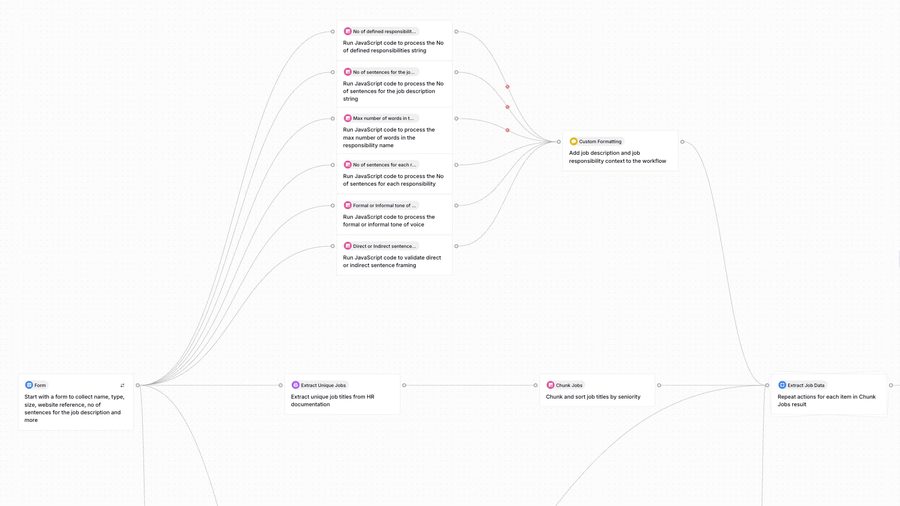
The 8 LangChain alternatives that matter in 2026 are Lleverage, LlamaIndex, Haystack, Microsoft Agent Framework, DSPy, Lyzr, Google's Gemini Enterprise Agent Platform and Microsoft Foundry. Which one fits depends on what you are replacing: the framework itself, the runtime your agents run on, or the whole build for back-office work.
LangChain is an open source framework for building applications on large language models, such as chatbots, question answering and agents. It made it possible to ship a working LLM prototype in a weekend. Three years on, it has also made it painfully clear that a working prototype is a long way from a working production system. Engineers hit a wall of overlapping abstractions, operations leaders inherit projects where every model upgrade breaks a chain, and the person who wrote it has often left the company.
This guide groups the alternatives by what they actually replace. Some are leaner frameworks for developers. Some are managed agent platforms inside a cloud. And one removes the framework question for back-office work entirely. That last one is ours: Lleverage is the autonomous back office for companies that make, move and sell physical products, and its AI agents handle orders, invoices and supplier confirmations inside your ERP, with no Python pipeline to maintain. If a developer or partner pushed LangChain on your operations team, book a demo and compare.
Why do teams look beyond LangChain in 2026?
LangChain alternatives have moved from niche to mainstream because the original framework was optimised for prototyping rather than production. The most common reasons teams switch are abstraction overhead that makes debugging slow, brittle behaviour when the underlying models change, dependency churn that breaks builds, and missing evaluation, observability and approval workflows that production operations need.
Three things changed between 2023 and 2026. Foundation models got far more capable, so much of the orchestration logic LangChain provided is no longer needed: the model does it natively. The big clouds shipped their own agent platforms with observability, governance and approval flows built in. And mid-market operations teams started buying outcomes rather than toolkits. Nobody in finance or supply chain wants to maintain a chain of Python wrappers. They want invoices processed, orders captured and exceptions flagged.
LangChain itself is very much alive: it is still actively developed, with new releases every few weeks, and it remains a reasonable choice for research and rapid experimentation. For production work in a regulated mid-sized company, it is rarely the right starting point in 2026.
What should you look for in a LangChain alternative?
Before comparing tools, decide which category of replacement you need. The wrong category gets you a faster prototype with the same long-term maintenance problem. Use the table below as a first filter.
| If your goal is | Look at |
|---|---|
| A leaner developer framework with less abstraction | LlamaIndex, Haystack, DSPy |
| Multi-agent workflows in code, on the Microsoft stack | Microsoft Agent Framework |
| A managed agent platform inside a cloud | Gemini Enterprise Agent Platform, Microsoft Foundry |
| Ready-made enterprise agents with governance modules | Lyzr |
| Workflow automation with LLM steps for operations teams | n8n, Make, Zapier |
| Back-office work inside the ERP, done for you | Lleverage |
If n8n is on your list, our guide to n8n alternatives compares 15 of them. Beyond the category, these criteria matter most for production work:
- Deterministic behaviour, and the ability to constrain the output
- Integration with your ERP and document systems
- Observability and an audit trail
- Evaluation tooling
- Role-based access control
- How steep the learning curve is, and how good the documentation is
- A clear support model when something breaks at 02:00
A framework that scores high on developer ergonomics and low on observability is a sandbox, not a production system. If you are still deciding whether to build at all, our build vs buy guide for back-office AI agents sets out what each path really costs.
The 8 LangChain alternatives compared in 2026
The shortlist covers the full range, from minimal libraries to fully managed layers. None of them beats LangChain at everything. Each one is better for a specific job, so pick the one that matches the job you have.
| Alternative | Best for | Type | Hosted |
|---|---|---|---|
| Lleverage | Back-office work: orders, invoices, supplier confirmations | Autonomous back office | EU hosted, on-prem where needed |
| LlamaIndex | Document parsing and retrieval | Open source framework, plus LlamaParse | Self-host or LlamaCloud |
| Haystack | Auditable, modular pipelines | Open source framework | Self-host or Haystack Enterprise |
| Microsoft Agent Framework | Python and .NET teams on the Microsoft stack | Open source SDK | Self-host or Azure |
| DSPy | Programmatic prompt optimisation | Open source framework | Self-host |
| Lyzr | Enterprise agents in regulated industries | Agent platform | Lyzr Studio or your own environment |
| Gemini Enterprise Agent Platform | Google Cloud teams | Managed agent platform | Google Cloud |
| Microsoft Foundry | Microsoft and Azure teams | Managed agent platform | Azure |
1. Lleverage

Lleverage is the autonomous back office for companies that make, move and sell physical products, with no framework for you to assemble. Its AI agents take whole jobs off the desk: they read orders, invoices, purchase orders and supplier confirmations from email, PDF and portals, check every line against the ERP and your business rules, and write the clean ones back the way a person would. People only see the exceptions. You can sign up for free to try it, and our engineers set up the first workflow with your team.
Supervised agents take jobs in Teams, Slack or a shared inbox, background automation runs the high-volume processes, and both feed one company brain that learns from every correction. It works inside SAP, Business Central, Dynamics 365 F&O, Exact, AFAS and Infor with no migration, with thresholds, approval levels and a full audit trail. It is EU hosted, with SOC 2 Type II, ISO 27001 and GDPR in place, and forward deployed engineers set it up with your team. Best for: manufacturers, wholesalers, distributors and logistics operators that want order management, three-way matching and master data handled, rather than a Python stack to maintain.
2. LlamaIndex
LlamaIndex is the strongest LangChain alternative when your own documents are the core of the job. Its open source framework treats retrieval as the central problem, with specialised indexes, retrievers and query engines, and the company now leads with LlamaParse, its service for parsing and extracting data from complex documents. Best for: technical teams building document search, document Q&A or research assistants on large internal collections of documents.
3. Haystack
Haystack, from deepset, has been around as long as LangChain and has stayed deliberately modular. It now describes itself as open source AI orchestration for production-grade agents. Pipelines are built from explicit components, which makes the system easier to reason about and to debug, and deepset sells Haystack Enterprise for teams that want support and a managed platform. Best for: teams that want a framework without LangChain's abstraction layers, especially in regulated industries where every step in a pipeline must be auditable.
4. Microsoft Agent Framework
Microsoft Agent Framework is the successor to both Semantic Kernel and AutoGen, which earlier comparisons on this blog listed separately. Semantic Kernel's own repository now calls it the enterprise-ready successor, and AutoGen has moved to maintenance mode, with new users pointed to the Agent Framework. It supports Python and .NET, with graph-based workflows for multi-agent patterns, human-in-the-loop steps and OpenTelemetry tracing. Best for: engineering teams on the Microsoft stack, and anyone with a Semantic Kernel or AutoGen build that needs a supported way forward.
5. DSPy
DSPy started at Stanford NLP and takes a different approach from LangChain: its motto is to program your language models rather than prompt them. Developers declare a task as typed inputs and outputs, choose a module for how it runs, and let an optimiser tune the prompts until quality converges. For teams burned by prompt fragility, it is a different way to work. Best for: research-led teams and ML engineers who want their LLM calls to behave more like compiled code than tuned strings.
6. Lyzr
Lyzr sells an enterprise platform for taking AI agents to production. Agent Studio is where teams build agents, alongside modules for responsible AI, hallucination management, knowledge bases and orchestration, and a set of open source developer tools. Its focus is regulated industries such as banking, insurance, healthcare and government. Compared with assembling the same pieces in LangChain, it hands you more ready-made building blocks. Best for: enterprise AI and automation teams that want governed agents without building the framework layer themselves.
7. Gemini Enterprise Agent Platform
Google folded Vertex AI and its Agent Builder into the Gemini Enterprise Agent Platform in April 2026. It bundles agent design, tool use, evaluation and a managed runtime for deployment. Teams already invested in Google Cloud get tight integration with BigQuery, Cloud Run and the rest of the estate. Best for: Google Cloud engineering teams that want a managed agent runtime without leaving their cloud.
8. Microsoft Foundry
Microsoft Foundry, called Azure AI Foundry until Microsoft renamed it at the end of 2025, plays the same role inside Microsoft's cloud. It brings models, agents and evaluation together in one place, with deep integration into Microsoft 365, Dynamics 365 and the wider enterprise stack. For organisations standardised on Azure, it is often the path of least resistance. Best for: enterprise IT teams that already run governance, identity and data inside Microsoft and want their AI workloads to stay there.
Two names you may expect here are missing on purpose. Flowise, the visual LLM builder that the first version of this list included, was sunset by its team in August 2026: the code stays on GitHub under the Apache 2.0 licence, but there is no core team behind it any more. Semantic Kernel and AutoGen live on as Microsoft Agent Framework, above.
How should operations teams choose differently from developers?
Most LangChain comparisons are written for developers, so they weigh code style, library ergonomics and benchmark scores. If you are an operations director or finance controller, those criteria are mostly noise. For an operations team, the questions that matter are these:
- Who maintains it when the developer who built it leaves
- How you audit a decision when an auditor asks
- Whether finance can approve an exception inside the system
- Whether it works with your ERP today, without a six-month implementation first
- What the support model is when something breaks during month-end close
A framework like LangChain or LlamaIndex cannot answer those on its own. It relies on the team that built it. A managed layer answers them in the product.
A wholesale distributor running Business Central does not need a LangChain alternative for its invoice automation. It needs invoice automation. Choosing a framework, building the chain, connecting it to the ERP and maintaining it is exactly the cost it wants to avoid, and that gap is why we built Lleverage. For an operations view of the same trade-off, read how Dutch wholesalers are finally automating their back office.
Where does Lleverage fit among LangChain alternatives?
Among the alternatives above, Lleverage sits in a deliberately different category. If your goal is a back-office process that captures customer orders, books supplier invoices, matches purchase orders to goods receipts or checks supplier confirmations, Lleverage is the whole system rather than a part of it. We provide the agents, the connection to your ERP, the approval flows, the company brain and the engineers behind it. There is no LangChain to maintain, because there is no framework to assemble.
For operations teams in manufacturing, logistics and wholesale and distribution, that is usually the right shape of answer in 2026. The framework debate matters if you are building an AI product. It matters far less if you are trying to close the books on time.
Frequently asked questions
Is LangChain dead in 2026?
No. LangChain is still actively developed, with new releases every few weeks, and it remains a reasonable choice for research, internal tools and rapid prototyping. What has changed is the assumption that a framework is the right starting point for production AI in operations. For back-office work, a managed layer or a cloud agent platform is now usually the better choice.
What is the closest open source alternative to LangChain?
Haystack is the closest like-for-like open source alternative, with a more modular and auditable design. LlamaIndex is closest if your main use case is retrieval over your own documents, and Microsoft Agent Framework is closest for .NET teams. None of them solves the maintenance problem that LangChain leaves with the team that built the system.
Why do operations teams prefer managed layers over frameworks?
Frameworks put the whole build-and-maintain burden on the customer's developers. A managed layer like Lleverage treats the AI, the ERP connection and the support as one product, which is what operations teams are actually buying. The choice is between owning a Python stack you did not want and owning the operational outcome you did want.
Can Lleverage replace a LangChain build we already have?
For back-office work such as invoice processing, order entry and document capture, yes. The agent takes over the whole job inside your ERP, so the framework dependency and the custom code go away. Forward deployed engineers map the current process with your team first, including the exceptions the old build handled, so those carry over.
Which LangChain alternative suits a small ops team with no developers?
If you have no developers, none of the frameworks are right for you. The realistic options are a cloud agent platform with help from your cloud partner, a workflow tool like n8n with LLM steps, or a managed layer such as Lleverage. For ERP-connected back-office work in a mid-sized company, the managed layer carries the least risk.
See what an AI agent looks like inside your operations
LangChain alternatives are mostly a developer conversation. The operations conversation is about processing more invoices, capturing more orders and answering more quotes without adding headcount, and without inheriting a framework somebody else built. If that is your conversation, book a demo and we will show you an AI agent working inside your ERP on one of your own processes.