From Dozenschuivers to Digital: How Dutch Wholesalers Are Finally Automating
Lennard Kooy
·
7 min read
Dutch wholesale companies are ditching manual spreadsheets for AI automation, with firms like 140-year-old Koninklijke Dekker saving €400K+ annually. This guide reveals six critical processes to automate, provides a practical 30-day implementation roadmap, and shows how traditional wholesalers achieve 70-90% efficiency gains and 200-400% ROI within 12 months.
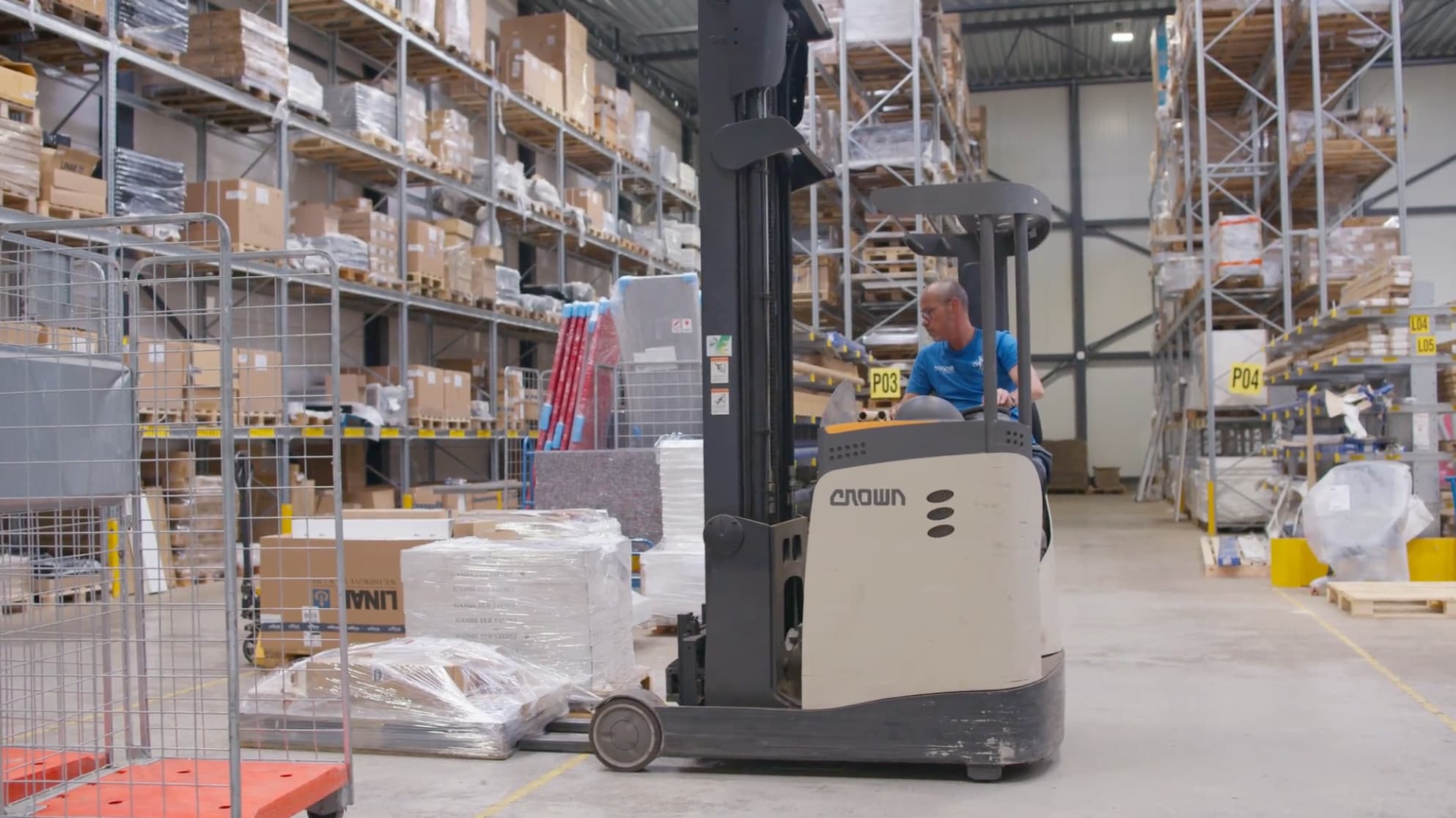
Walk into most Dutch wholesale companies today and you'll see something that would make a Silicon Valley CEO weep: employees manually typing order details from PDFs into ERPs, accounting teams drowning in paper invoices, and customer service reps answering the same "where's my order?" question for the 47th time this week.
It's 2026. We have AI that can drive cars and diagnose diseases. Yet the backbone of the Dutch economy is still running on Excel spreadsheets, email chains, and what Germans call "Fingerspitzengefühl" (gut feeling).
Here's the uncomfortable truth: Dutch wholesale companies have accidentally become dozenschuivers (box-pushers) in their own operations. The term traditionally described retailers who just moved boxes without adding value or expertise. Now it applies to how these same companies handle their own internal processes - pushing data from one system to another manually, without intelligence, without understanding, without adding value.
But something remarkable is happening. The Netherlands didn't become Europe's AI automation leader (95% organizational adoption) by accident. And now, traditional wholesale companies are proving that you don't need to be a tech startup to transform your operations fundamentally.
The €400,000 Question Nobody's Asking
Most Dutch wholesalers know they're hemorrhaging money on manual processes. What they don't realize is the scale of the problem.
The average wholesale distributor spends 23% of revenue on operating expenses - with much of it pure administrative waste. That €15 million wholesaler? They're likely burning €400,000+ annually just on data entry, invoice processing, and answering routine customer queries.
Here's where it gets interesting: unlike trendy tech companies that have already automated everything digital, traditional wholesale has barely scratched the surface. Companies are sitting on 70-90% efficiency gains hiding in plain sight.
After working with hundreds of Dutch wholesale companies on automation implementations, we've identified a clear pattern. The companies that succeed aren't the biggest or most tech-savvy. They're the ones who finally got honest about what they're actually doing all day.
From Koninklijke to Innovation: The 140-Year Wake-Up Call
Koninklijke Dekker provides the perfect example of what's possible when traditional companies stop accepting the status quo.
This 140-year-old lumber company - one of Europe's leading wood distributors - faced the same challenge most wholesalers recognize immediately: order chaos. Excel sheets, PDFs, text emails, all requiring manual interpretation from inside sales staff.
"We had a lot of Excel sheets, PDFs or text emails coming in with an order. This requires a lot of interpretation from our inside staff," their Continuous Improvement Team explained.
Instead of hiring more people to handle growing order volume, Dekker implemented order processing automation. The results weren't incremental - they were transformational:
Eliminated hours of manual data interpretation daily
Dramatically improved order processing speed
Freed sales teams to focus on actual customer relationships
Enhanced data quality across manufacturing and logistics departments
As they put it: "Since we implemented this solution with Lleverage we particularly see an improvement in our data quality, not only in our inside sales department but also in our manufacturing and logistics department, we simply see that we make fewer mistakes and can work more accurately."
This wasn't a tech company experimenting with AI. This was a traditional Dutch business proving that age is just a number when it comes to innovation.
The Six Processes Killing Your Profit Margins
Dutch wholesale companies share a unique operational profile. They deal with thousands of SKUs, hundreds of suppliers, volatile pricing structures, and customers who still use fax machines. Yes, in 2026.
Through analyzing hundreds of implementations, six back office processes consistently deliver immediate, measurable ROI. These aren't "nice to have" improvements - they're competitive necessities.
1. Order Creation: From 25 Minutes to 90 Seconds
Your typical Dutch wholesale order arrives via email, portal, sometimes even WhatsApp. Someone manually:
Opens the message
Interprets what the customer actually wants
Checks product codes and pricing
Validates inventory availability
Keys everything into the ERP
Sends confirmation
Average time per order: 15-25 minutes. Error rate: 5-10%. Customer satisfaction: declining.
Modern AI document processing doesn't just digitize orders - it understands them. The AI reads orders from any format (email, PDF, Excel, that photo your client sends), validates against your product catalog and inventory, checks customer-specific pricing and credit limits, and creates orders directly in your ERP.
One Dutch wholesale distributor reduced order processing from 25 minutes to 90 seconds while handling 3x the order volume. They saved €400,000 annually just on order entry, while reducing errors that previously cost them €200,000 in returns and corrections.
2. Invoice Processing: Where Money Goes to Die
Your accounts payable department is a black hole. Invoices arrive by email, mail, and portal. Each one needs manual entry, PO matching, approval routing, and payment processing.
Average time per invoice: 15-20 minutes. Late payment penalties: 2% of annual spend. Early payment discounts missed: another 2%. That's 4% of your total purchasing costs evaporating because of manual processing.
Invoice processing automation transforms this nightmare. Universal extraction processes invoices from any supplier in any format. Three-way matching automatically compares to purchase orders and receiving documents. Intelligent routing gets approvals to the right people instantly.
The ROI is immediate: 85% reduction in processing time, 70% cost savings, and capturing those early payment discounts that drop straight to your bottom line.
3. Customer Support: The Questions That Never End
"Where's my order?" "What's the price for...?" "Do you have stock of...?" Your support team answers these questions hundreds of times daily. Multiply by your hourly rate. That's your team's entire day gone, answering questions that could be automated.
Modern AI customer support automation understands natural language, connects to your systems for real-time information, provides proactive notifications, and intelligently escalates complex issues.
One Dutch logistics company reduced support tickets by 70% while improving response time from hours to seconds. Their support team transformed from cost center to revenue generator by focusing on identifying expansion opportunities during interactions.
4. Document Verification: Trust but Automate
Certificates of origin, quality certificates, compliance documents, bills of lading - in Dutch wholesale, documents aren't just paperwork, they're legal requirements. Manual verification means someone reviewing PDFs, checking dates, validating signatures, hoping they don't miss something that triggers a €50,000 customs fine.
VNA, a PE-backed pharmacy chain in the Netherlands, automated their document verification and achieved 90% time reduction in analyzing contracts. The AI doesn't just check completeness - it understands context, flags inconsistencies, and ensures regulatory compliance.
5. Quote Generation: Speed Kills (Your Competition)
Ynvolve, a server reseller in the Netherlands, had sales engineers spending 10-300 minutes creating complex quotes. After implementing AI quote generation automation:
90% reduction in quote creation time
50% forecasted revenue growth without additional hiring
€30,000 monthly savings
Improved accuracy in complex configurations
The AI handles product compatibility checks, pricing calculations, and even suggests upsell opportunities based on customer requirements.
6. Data Extraction: From Manual to Magical
Roamler, a data insights company operating in the Netherlands, had 15 people spending their days manually extracting data from retail product photos and documents. After implementing AI document processing, those team members now focus on data analysis and client strategy instead of repetitive extraction.
The company saves over €300,000 annually and delivers faster, more accurate insights to clients. This isn't simple OCR - it's intelligent extraction that understands context, handles multiple languages, and learns from corrections.
Why Dutch Wholesale Companies Are Different (And Why That's Your Secret Weapon)
Dutch wholesale companies face a unique operational reality. You're not just dealing with digital information - you're managing physical products across dozens of disconnected systems while customers still send orders via every communication method invented since 1985.
This complexity is actually your advantage. While tech companies have already optimized their digital operations, wholesale has barely started. The efficiency gains available are massive because the starting point is so manual.
The Netherlands has several unique advantages that make automation adoption particularly compelling:
Government Support: €276 million invested in AI programs, with specific initiatives supporting SME automation projects
Strategic Location: Rotterdam's port and Amsterdam Schiphol create the gateway to Europe, meaning operational efficiency directly impacts competitiveness
Skilled Workforce: High educational levels mean teams can focus on strategic work when freed from manual tasks
Early Adopter Culture: 95% of Dutch organizations already run AI programs - the highest rate in Europe
The 30-Day Quick Start: Your Automation Roadmap
Most Dutch wholesalers make the same mistake: they try to automate everything at once and end up automating nothing. The companies that succeed start small but think big.
Days 1-5: Pick Your Battle
Choose ONE process to start. We recommend order creation or invoice processing - they're painful enough to motivate change but straightforward enough to ensure success.
Calculate your baseline metrics:
How many orders/invoices per day?
Current processing time per item
Error rates and associated costs
Staff time involved
One Dutch distributor discovered they were processing 200 orders daily at an average of 18 minutes each. That's 60 hours of daily labor - or 7.5 FTEs - just on order entry.
Days 6-15: Choose Your Approach
Not all automation is created equal. Traditional RPA tools require extensive IT involvement and break when anything changes. AI-native platforms like Lleverage allow you to describe your process in plain Dutch and get automation running in days.
Key decision criteria:
Does it integrate with your existing systems (Business Central, SAP, Dynamics, AFAS)?
Can your business experts configure it, or do you need developers?
How does it handle exceptions and variations?
What happens when suppliers change their invoice formats?
Days 16-25: Implement and Test
Run your automation parallel to existing processes for confidence. Most Dutch companies find that AI automation achieves 99%+ accuracy within the first week, compared to 85-95% human accuracy.
This parallel period serves another crucial purpose: it convinces the skeptics. When your team sees the automation handling their most difficult cases flawlessly, resistance evaporates.
Days 26-30: Measure and Communicate
Track the metrics that matter:
Time saved per transaction
Error reduction rates
Cost per processed item
Employee satisfaction improvements
Customer experience enhancements
Share results widely. Nothing builds momentum like visible success.
The Pattern That Predicts Success
After hundreds of implementations across Dutch wholesale companies, we've identified the pattern that separates success from failure.
Successful Companies:
Start with a specific pain point, not a technology search
Get business experts involved early (not just IT)
Choose platforms that work with existing systems
Measure results relentlessly
Scale after proving ROI
Failed Implementations:
Try to automate everything simultaneously
Let IT choose solutions without business input
Require replacing existing systems
Focus on technology features over business outcomes
Never calculate actual ROI
The difference is stark. Companies following the success pattern see:
30-50% reduction in operational costs
60-80% faster processing times
90%+ reduction in errors
200-400% ROI within 12 months
The "Gezond Verstand" Approach to Automation
Dutch business culture has a phrase that perfectly describes the right automation mindset: gezond verstand (common sense). The companies succeeding with automation aren't chasing technology trends. They're applying practical wisdom to longstanding problems.
This means:
Process-First Thinking: Dekker didn't say "we need AI." They said "we need to stop manually processing orders." Start with the problem, not the solution.
Practical Implementation: Instead of massive digital transformation projects, implement focused solutions that show ROI quickly. Start with invoices, prove value, then expand.
Data Security Without Paranoia: Dutch companies take GDPR seriously but don't let it paralyze them. Modern automation platforms are built for European data protection requirements from the ground up.
Realistic Expectations: Automation won't fix broken processes. If your order workflow is chaos, automating it just creates faster chaos. The best implementations include process improvement alongside automation.
Why Now? The Competitive Imperative
The window for implementing automation is closing rapidly. Not because the technology will disappear, but because your competitors are already moving.
Market Pressure: Larger wholesalers are automating aggressively, reducing costs and response times. Mid-sized distributors face margin pressure from both traditional competitors and direct-to-consumer manufacturers.
Regulatory Requirements: New Dutch accounting compliance rules in 2026 require digital bookkeeping and real-time auditing capabilities. Manual systems won't cut it.
Talent Shortage: Finding skilled employees willing to do manual data entry is increasingly difficult. Dutch workers, especially younger generations, expect modern technology in the workplace.
Customer Expectations: B2B buyers increasingly expect the same instant response and transparency they get in B2C transactions. "We'll check and get back to you" doesn't work anymore.
The Dutch wholesale companies thriving in 2026 share one characteristic: they stopped being dozenschuivers in their own operations. They transformed from simply pushing boxes to intelligently orchestrating complex processes.
Your Next Steps
The difference between companies that successfully automate and those that don't isn't technical capability. It's willingness to start.
Here's your action plan:
Identify Your Biggest Pain Point: Which process consumes the most time relative to value created?
Calculate Current Costs: How much are you really spending on manual processing? Include time, errors, delays, and missed opportunities.
Learn from Others: Look at case studies from similar Dutch companies. What worked? What didn't?
Start Small: Choose one process, implement automation, measure results, then scale.
Get Expert Help: Whether it's data transformation automation or production planning, specialized platforms designed for wholesale operations deliver faster results than generic tools.
The future of Dutch wholesale isn't about replacing the human expertise that built these companies. It's about freeing that expertise to focus on what humans do best: building relationships, solving complex problems, and creating value.
The dozenschuiver mentality - just moving boxes from A to B without adding intelligence - is rapidly becoming extinct. The question isn't whether to automate, but whether you'll lead the transformation or scramble to catch up.
Ready to explore what AI automation could do for your wholesale operation? Book a demo to see how you can automate your most time-consuming processes without needing technical expertise.
Frequently Asked Questions
How long does it actually take to implement automation in a wholesale company?
For focused use cases like order processing or invoice handling, most Dutch companies see their first automated processes running within 2-4 weeks using modern AI-native platforms. Traditional implementation approaches that require extensive IT involvement can take 3-6 months. The key difference: platforms like Lleverage allow business experts to describe processes in natural language rather than requiring technical development.
What if our suppliers and customers use inconsistent formats?
This is actually where AI automation shines compared to traditional tools. Modern AI understands context and meaning, not just specific formats. Whether your customer sends orders via email, PDF, Excel, or portal, the AI can extract the relevant information. When a supplier changes their invoice format (which they inevitably will), AI-based systems adapt automatically rather than breaking like traditional RPA tools.
Do we need to replace our current ERP system?
No. Modern automation platforms integrate with your existing systems rather than replacing them. Whether you're using Business Central, SAP, Dynamics 365 F&O, AFAS, Infor, or Navision, AI automation acts as an intelligence layer on top of your current technology stack. The automation handles the messy, unstructured inputs (emails, PDFs, phone calls) and creates clean, structured data for your ERP.
What about data security and GDPR compliance?
Dutch companies should specifically look for automation platforms built with European data protection requirements. Key considerations: data processing within EU, GDPR-compliant architecture, clear data handling policies, and audit trails. The Netherlands' strict regulatory environment has actually pushed Dutch automation providers to develop particularly robust security frameworks.
How do employees typically react to automation?
Initial concern is normal, but the pattern is consistent: once employees see that automation handles tedious tasks while they focus on interesting work, resistance turns to enthusiasm. At Koninklijke Dekker, staff appreciated improved data quality and fewer manual errors. At Roamler, the 15-person data extraction team moved into strategic analysis roles. The key is clear communication about automation augmenting rather than replacing human expertise.
What's a realistic ROI timeline for wholesale automation?
Most Dutch wholesale companies see positive ROI within 6-12 months, with full payback typically occurring in the first year. For high-volume processes like order entry or invoice processing, ROI can materialize within weeks. The compound effect becomes apparent as you automate multiple processes - each additional automation is faster and cheaper to implement because you're leveraging the same platform and approach.
Can we automate just one process initially?
Absolutely - in fact, this is the recommended approach. Starting with a single, well-defined process (like processing orders from your largest customer) allows you to prove value quickly, build organizational confidence, and learn before scaling. Companies that try to automate everything at once typically struggle with complexity and change management.
What happens when the automation encounters something it can't handle?
Modern AI automation uses intelligent escalation. When the system encounters an edge case or uncertainty above its confidence threshold, it routes the item to a human for review. The system learns from these exceptions, gradually handling more variations. This hybrid approach ensures nothing gets lost while continuously improving automation coverage. Most implementations start around 80% automation and improve to 95%+ within months.