
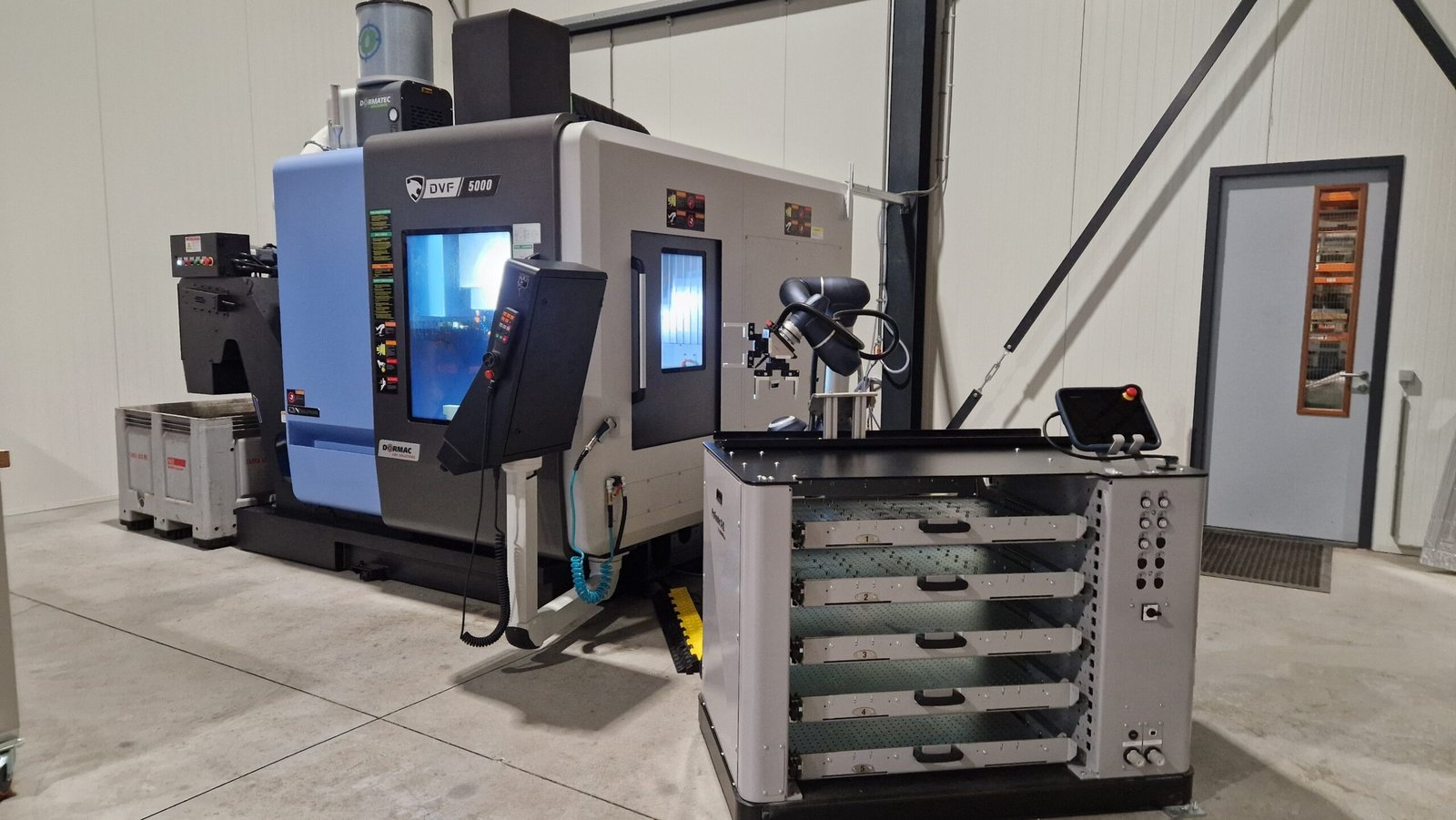
Precision work, and the unglamorous 10 minutes that come before it
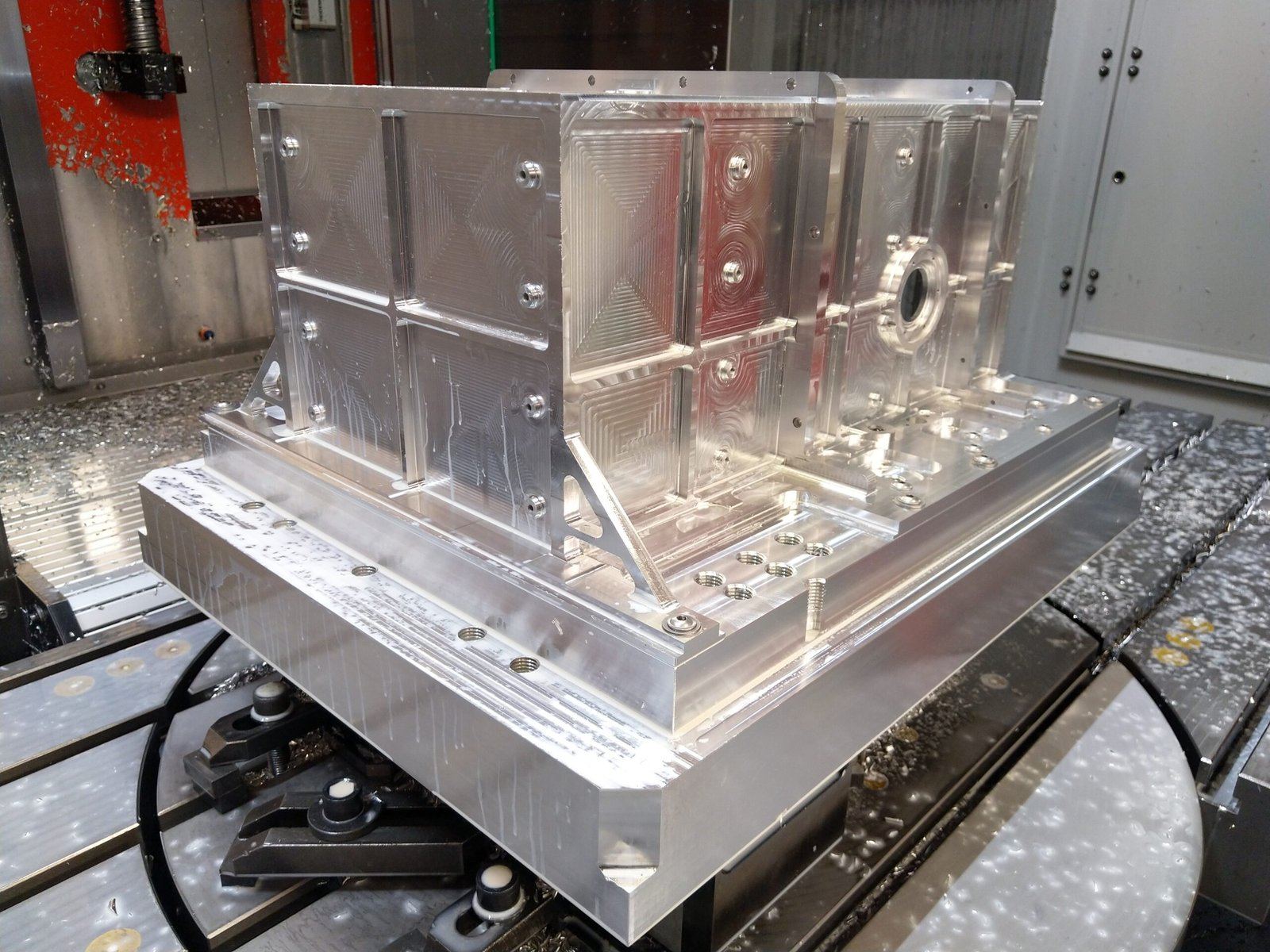
Microtechniek is a 130-person mechanical engineering firm in Velsen-Noord, serving heavy industry and aerospace manufacturers. Across 4 semi-autonomous business units it turns and mills components, welds and maintains installations on customer sites, and makes high-precision parts for aerospace, nuclear, optical and semiconductor work. It is the kind of business where a tolerance is measured in hundredths of a millimetre and a wrong article number is a scrapped week.
Work like that is exacting on the shop floor and surprisingly ordinary before it. Nothing gets cut until an order exists in the ERP with the right customer, the right contact, the right delivery date and the right shipping address on it. Somebody has to put it there. In a jobbing engineering firm that somebody reads a purchase order, recognises the company behind it, finds them in the system, and types.
Microtechniek had already done the hard work on its back office. Over the preceding years, workflow tools and Power BI replaced manual processes one after another, and the admin team shrank from 4 people to 1. One category held out, and it was the category that mattered most. Anything that had to read from or write to the ERP stayed manual, because the ERP had no way in.
20 to 30 emails a day, and one person to read them
Every working day, 20 to 30 emails arrived in a shared inbox: purchase orders, but also timesheets, quote requests, service notifications and general correspondence. Each purchase order needed more than 20 fields extracted and resolved by hand: customer identification, order category, delivery dates, contact persons, shipping addresses. Many of them had to be matched against entities already in Ridder IQ, the company’s on-premise ERP.
Some of those orders were easy. Others took judgement that is not written down anywhere. One of Microtechniek’s largest customers uses inconsistent abbreviations across several sub-locations, so a single order can reference different entities inside the same group, and telling them apart is knowledge that takes months on the desk to build. Get it wrong and the order is booked against the wrong site.
One admin did all of it. Open the PDF. Work out who sent it. Check whether the contact already exists in Ridder IQ. Build the order container. Key the fields. File the email in the right folder. About 10 minutes an order, over an hour a day, every working day.
The part that hurt was not the hour. It was that the hour could only happen when one person was at their desk. Nothing was processed in the evening, nothing at the weekend. An order that arrived at 16:00 on a Friday afternoon waited until Monday morning before it existed anywhere the factory could see it.
The back office automation Microtechniek runs on now
The reason this bottleneck outlived every other one was the ERP itself. Ridder IQ ran on-premise, and the on-premise installation did not expose the API module the cloud version has. In manufacturing this is a familiar dead end, and it is usually where the conversation about automation stops. 2 other automation projects at similar companies had already failed at exactly this point.
Microtechniek’s director, Sebastiaan Röben, framed the project as more than an efficiency exercise. The hours saved on order entry were real, but the bigger prize was the door. If an agent could write into Ridder IQ, the same route would open up invoice processing, procurement and everything else that touches the ERP. So the door came first. In December 2025 a Ridder specialist installed the API module on-site, and the Lleverage team reverse-engineered the cloud API to work with the on-premise environment. Not a standard integration path. It worked.
Joost Verdoorn led the build from the Lleverage side, working with Janneke van Duivenvoorde and Martin Barnas, both ERP administrators at Microtechniek. The design priority was accuracy over speed. Before the agent touched a live order, it had to prove it could handle the full complexity of Microtechniek’s real order data, inconsistent customer abbreviations and multi-location orders included.
With a way in, the workflow follows the shape of any good order desk. It first classifies what arrives, because roughly half of what lands in the inbox is not an order: timesheets, quote requests, service entry notifications, general correspondence. Those are routed for separate handling. A real purchase order has its fields extracted, its sender matched against the customer records in Ridder IQ, and where it follows a quotation already in the ERP, the two are linked so the order arrives priced and specified rather than re-entered. A sender the system has never seen gets a contact created rather than stalling the order. Then the order is written and the email filed in the right Outlook folder.
What the workflow will not do is push ahead when it is unsure. Every extraction and every match carries a confidence, and anything below the line goes to a person instead of being guessed at. The admin’s day changes from typing everything to looking at the few that need a human.