

Working with Lleverage’s AI engineering team, Solifi developed an agentic document intelligence capability that brings automated document validation directly into secured finance workflows. Solifi contributed the secured-finance expertise, workflow requirements, platform context and product vision. Lleverage brought specialist expertise in AI orchestration and intelligent automation to help bring that vision to life.
The result is a jointly developed capability designed to evaluate documents as they arrive, compare information against defined business rules and application data, and surface exceptions with supporting evidence for review.
Fifty years of secured finance expertise, applied to a persistent manual process
Solifi has spent decades building technology for banks, independent finance companies and captive lenders across equipment finance, automotive and fleet finance, wholesale finance, working capital and other secured lending markets.
That experience provides a detailed understanding of the processes behind a lending decision, including the operational work that happens between approval and payout.
Before funds move, supporting documents need to align with the information behind the transaction. A contract may require an appropriate signature and date. An invoice needs to correspond to the supplier and transaction. Bank details need to match the information submitted. Identity documentation needs to meet the lender’s requirements.
Each individual check can appear straightforward. At scale, the cumulative operational effort is significant.
For much of the industry’s history, those comparisons have depended heavily on people reading documents, finding the relevant information and checking it manually against application data.
A file was often reviewed only once the whole file existed
Traditionally, documents for a single application may arrive one at a time from applicants, dealers, brokers and other parties. Review frequently begins once enough documentation has arrived for the file to be considered complete.
A funding team then works through the documents against the transaction record. Does the contract contain the required information? Does the invoice correspond to the expected supplier? Do bank details agree with what was submitted? Is the identity information consistent with the application?
When something does not align, the file may need to go back for correction or clarification before funding can continue. If the discrepancy is discovered late in the process, the exception introduces another round of communication at precisely the point when the transaction is expected to progress toward completion.
Solifi identified an opportunity to move that intelligence earlier into the workflow.
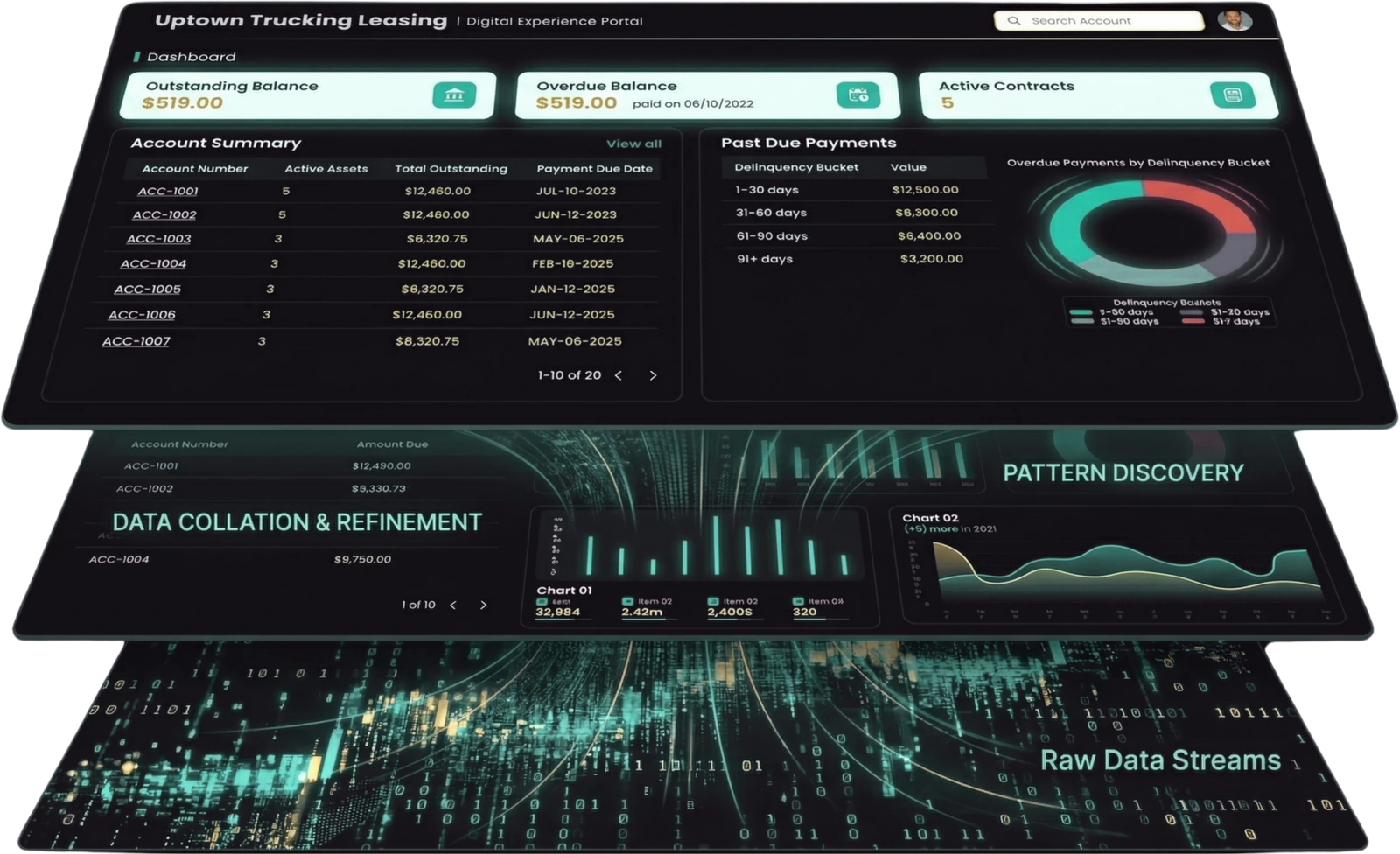
Bringing intelligent document validation into the secured finance platform
The objective was larger than automating one lender’s back-office process. Solifi wanted to make document intelligence part of the secured finance workflow itself.
Solifi brought the product vision and secured-finance context: how documents move through an application, what information needs to be evaluated, where exceptions create delays, how validation rules should operate and how results need to appear within the lender’s existing workflow.
Lleverage brought specialist expertise in AI engineering, agentic orchestration and intelligent workflow automation.
Together, the teams developed a document intelligence capability designed to operate within Solifi’s technology environment. Instead of requiring lenders to create an additional manual process around their core lending technology, document validation can become part of the workflows Solifi already supports.
That combination is central to the collaboration. Solifi understands the operating decisions secured lenders need to make and the environment in which those decisions occur. Lleverage helped translate that product vision into an intelligent automation capability that could be incorporated into the Solifi platform.
Turning secured-finance expertise into agentic document intelligence
Solifi and Lleverage translated the document-review process into an intelligent workflow built around the requirements of secured finance.
The capability can receive three important sources of context:
- Application and transaction data
- Submitted documents
- Defined validation requirements and business rules
Individual checks can then be evaluated independently. A contract may need specific signatures, dates or transaction information. An invoice may need to correspond to the supplier and transaction details held in the system. Bank information may need to align with submitted application data. Identity documentation may need to meet the lender’s defined requirements.
The capability evaluates the available evidence and returns the relevant result and supporting context. When an exception is identified, the funding team can see what was expected, what was found and why the item requires attention.
The objective is not to remove human judgment from the funding process. It is to reduce the time people spend manually finding and comparing information so they can focus on the exceptions and decisions that require their expertise.
What happened to each step
A largely manual document-review process could involve:
- Waiting for the required documentation to arrive
- Reading documents individually
- Checking signatures, dates and other required information
- Comparing information with application or transaction data
- Identifying discrepancies and pursuing corrections
With document intelligence, several of those activities can be handled automatically as documents enter the workflow:
- Document review: relevant information is identified without requiring every field to be located manually.
- Defined validation checks: signatures, dates and other required information can be evaluated against predefined requirements.
- Cross-checking against transaction data: document information can be compared with data already held in the workflow.
- Earlier exception identification: potential discrepancies can surface as documents arrive rather than only after the complete file has been assembled.
- Human review and decision: funding teams retain control of the decision while receiving the evidence and context required to act.
What changed
The document-review process no longer needs to depend entirely on a person opening every document and manually comparing every relevant field. Document intelligence can operate as documents enter the Solifi workflow, allowing certain discrepancies to surface earlier.
The funding team’s role changes as a result. Rather than spending the majority of its time locating information and performing repetitive comparisons, the team can focus more attention on the exceptions that require review, clarification or judgment.
The technology handles more of the mechanical evaluation. People remain responsible for the decisions.
Built once, incorporated into the Solifi platform
For Solifi, the broader opportunity is to turn a common operational requirement into a reusable platform capability.
Secured finance institutions share many document-intensive processes, even though the exact requirements, rules and workflows vary by lender, asset class, geography and transaction type. By developing document intelligence as part of the Solifi technology environment, the underlying capability can support different workflows and use cases without requiring each lender to design an entirely separate automation process.
That approach also supports Solifi’s broader platform strategy. Solifi connects workflows, operational data and intelligence across the secured finance lifecycle. Agentic document intelligence adds another layer of intelligence to those existing operations, helping transform information already moving through the Solifi platform into evidence that people can act on.
A practical model for AI in secured finance
The collaboration reflects how Solifi is approaching artificial intelligence across secured finance.
- Start with a real operating problem.
- Apply deep domain knowledge to understand the workflow, decision and business rules behind it.
- Use intelligent automation where it can remove repetitive work or improve the quality and speed of information available to people.
- Provide evidence and context rather than opaque answers.
- Keep people responsible for decisions where judgment, governance or risk require human oversight.
Document validation is one application of that model. The same approach can potentially support other document-intensive and exception-driven workflows across secured finance as the capability evolves.
What this opens up
Document intelligence creates value beyond the first validation workflow.
- More document types and workflows: secured finance operations rely on far more documentation than the initial use cases addressed by the collaboration. Because validation requirements can be defined around specific document types and workflows, the capability can be extended as Solifi identifies additional high-value use cases.
- Structured information from unstructured documents: when the technology identifies information in a document in order to evaluate it, that information can potentially become useful elsewhere in the workflow. Rather than repeatedly re-keying data already contained in submitted documentation, extracted information may be made available to downstream processes where appropriate.
- Continuous improvement through review: human review can also help improve future performance. When a user corrects, confirms or overrides a result, that feedback provides useful information about how validation rules and intelligent workflows should evolve. Over time, the combination of technology, domain expertise and human oversight can make the process more effective without removing the governance required for secured finance.
Innovation grounded in secured finance
The Solifi and Lleverage collaboration demonstrates what practical AI innovation can look like in a complex financial environment.
Solifi contributed decades of secured-finance expertise, platform context and a clear understanding of the operational problem lenders face. Lleverage contributed specialist AI engineering expertise that helped translate that vision into an intelligent workflow. Together, the teams created a capability designed to put intelligence inside the secured finance process rather than around it.
For Solifi, that is the larger opportunity for agentic AI: applying intelligent automation to the workflows lenders already depend on, connecting it to the data and business rules already present in the Solifi platform, and giving people better information with which to act.
That is how innovation moves from an AI concept to a practical secured-finance capability.